The Paradigm Shift in Bio-Signal Processing
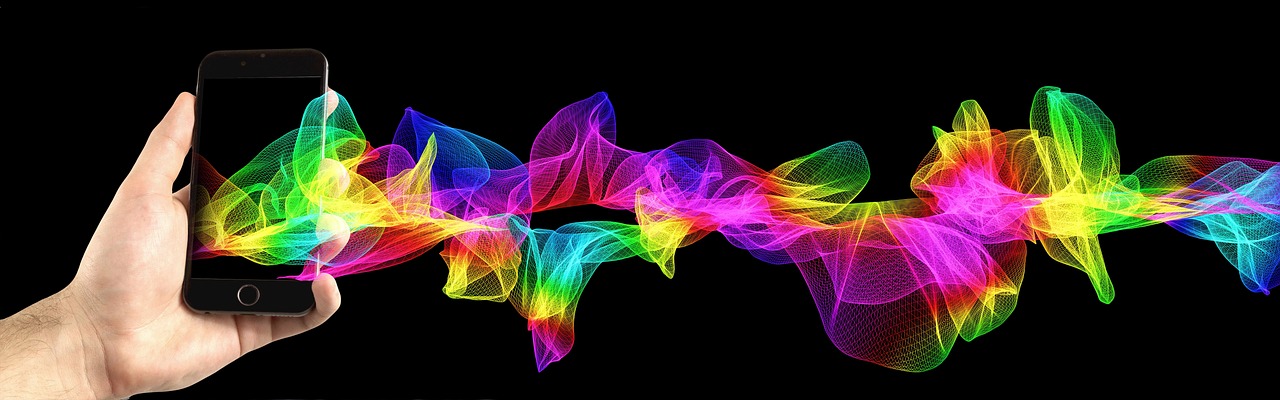
Traditional signal processing in clinical environments relies heavily on Fourier-based spectral analysis, which often struggles with the non-stationary, high-entropy nature of physiological waveforms. Harmonic Resonance Synthesis (HRS) introduces a novel approach: treating biological signals as interacting wave-fronts within a synthetic interference manifold. By leveraging constructive and destructive wave interference, HRS allows for the isolation of minute pathological biomarkers from high-noise clinical environments.
Underlying Architecture: Wave-Interference Manifolds
At the core of HRS lies the transformation of temporal data into complex wave-interference patterns using Differentiable Oscillatory Kernels. Unlike standard deep learning models that treat data as static vectors, HRS architectures operate in the frequency-domain space to detect subtle phase-shifts indicative of early-stage neuro-degeneration or cardiovascular arrhythmia. This architecture enables the system to maintain computational efficiency while handling massive, multi-modal streaming data from wearables and bedside monitors.
Why It Matters
The clinical utility of HRS is transformative. By filtering signal noise through harmonic resonance rather than threshold-based dampening, we reduce 'alarm fatigue' and increase the diagnostic sensitivity of real-time ICU monitoring systems. This represents a transition from reactive monitoring to predictive, wave-patterned diagnostic intervention.
- Precision: Enhances signal-to-noise ratios in low-power mobile devices.
- Low Latency: Operates on wave-interference logic rather than heavy matrix multiplication.
- Clinical Efficacy: Provides clearer visualization of transient physiological anomalies.