Your GPS Knows Roads, But Does It Understand Traffic?
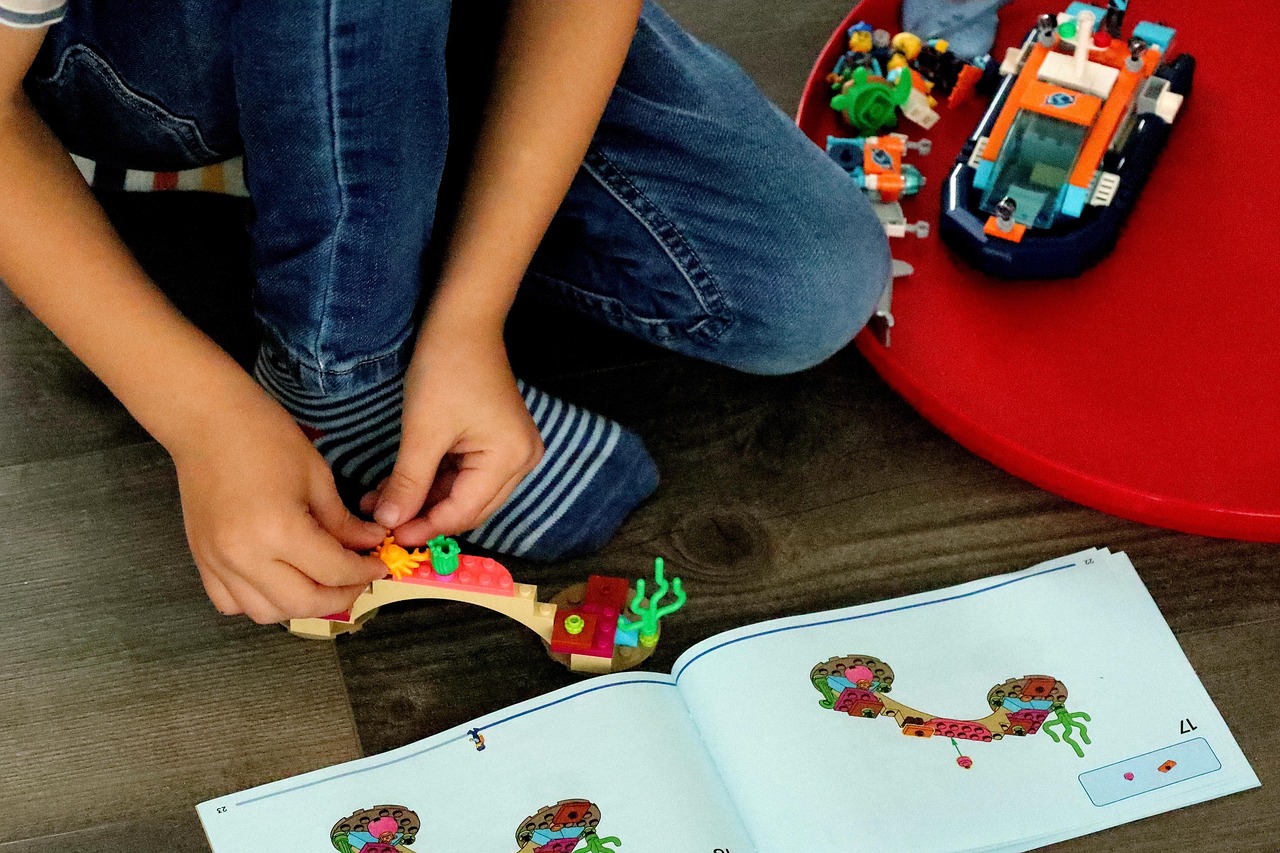
Imagine a child learning about the world. They don't just memorize pictures of cars; they push a toy car, see it roll, understand that pushing makes it move, and that walls stop it. They build an internal 'mind map' of how objects behave, how actions lead to consequences, and the underlying rules of their environment. This isn't just pattern recognition; it's understanding.
For decades, Artificial Intelligence has been a master of pattern recognition. Give it millions of cat pictures, and it'll spot a cat. Feed it enough medical scans, and it can diagnose diseases. But ask it why the cat is sitting there, or what would happen if you nudged that particular tumor, and traditional AI often draws a blank. It lacks a foundational 'mind map' of reality, a deep understanding of cause-and-effect, object permanence, or how the world works beyond its training data.
The Cognitive Leap: AI That Builds Its Own World Model
Enter a groundbreaking development in Cognitive Computing: AI systems that are learning to construct and refine their own internal 'world models.' Think of it as AI building its own mental blueprint of reality, not just memorizing observations. Instead of just seeing that 'A' often leads to 'B', these systems aim to understand why A causes B, and what other factors might influence that relationship.
How does it work? Like our curious child, these AIs interact with simulated or real environments. They perform actions, observe the outcomes, and continuously update their internal model of physics, object properties, and causal relationships. If a robot pushes a block and it falls, it doesn't just record 'push + block = fall.' It starts to infer properties like gravity, object weight, and surface friction, building a rich, dynamic understanding of its surroundings. This is often achieved through advanced techniques combining neural networks with symbolic reasoning, allowing the AI to learn both patterns and rules.
Why This Isn't Just Another AI Buzzword
This isn't just a cool academic pursuit; it's a monumental shift with real-world implications:
- Less Data, More Generalization: Current AI needs colossal datasets. An AI with a robust world model can learn faster from fewer examples, applying its understanding to entirely new situations it hasn't been explicitly trained on. Imagine a self-driving car that understands basic physics, so it can navigate an unexpected obstacle without needing to have seen that exact scenario a million times.
- Robustness & Common Sense: By understanding underlying principles, these AIs are less susceptible to 'adversarial attacks' (tiny changes that fool current models) and can exhibit a form of 'common sense' reasoning. They can make educated guesses in ambiguous situations, much like a human.
- Explainability: Because the AI has an internal model of 'why' things happen, it becomes easier for humans to understand its decision-making process, fostering trust and enabling better debugging.
- Proactive Problem Solving: Instead of just reacting, an AI with a world model can simulate future scenarios, anticipate problems, and plan optimal actions to achieve goals, even in complex, uncertain environments.
Your Career in an AI-Modeled World
This cognitive leap fundamentally changes the landscape of AI development and deployment. Here's how it affects your career path:
- New Roles Emerge: We'll need 'Cognitive AI Architects' who design these world-modeling systems, 'Causal Engineers' who specialize in teaching AI about cause-and-effect, and 'Simulation Environment Developers' who craft the rich digital worlds where AIs learn.
- Human-AI Collaboration Deepens: As AI becomes a more capable reasoner, roles focused on human-AI teaming, ethical AI oversight, and AI interpretability will become paramount. You'll be guiding and refining AI's understanding, not just feeding it data.
- Interdisciplinary Skills are King: Professionals who can bridge the gap between computer science, cognitive psychology, philosophy (especially epistemology and causality), and systems engineering will be highly sought after. Understanding how humans learn and reason will be invaluable for building machines that do the same.
- Shift from Data Curator to Model Curator: While data remains important, the focus shifts to curating and validating the 'experiences' and interactions that help AI build accurate world models, rather than just raw datasets.
The future isn't about AI replacing human intelligence; it's about AI augmenting it by finally grasping the fundamental rules of reality. Are you ready to help machines build their mind maps?