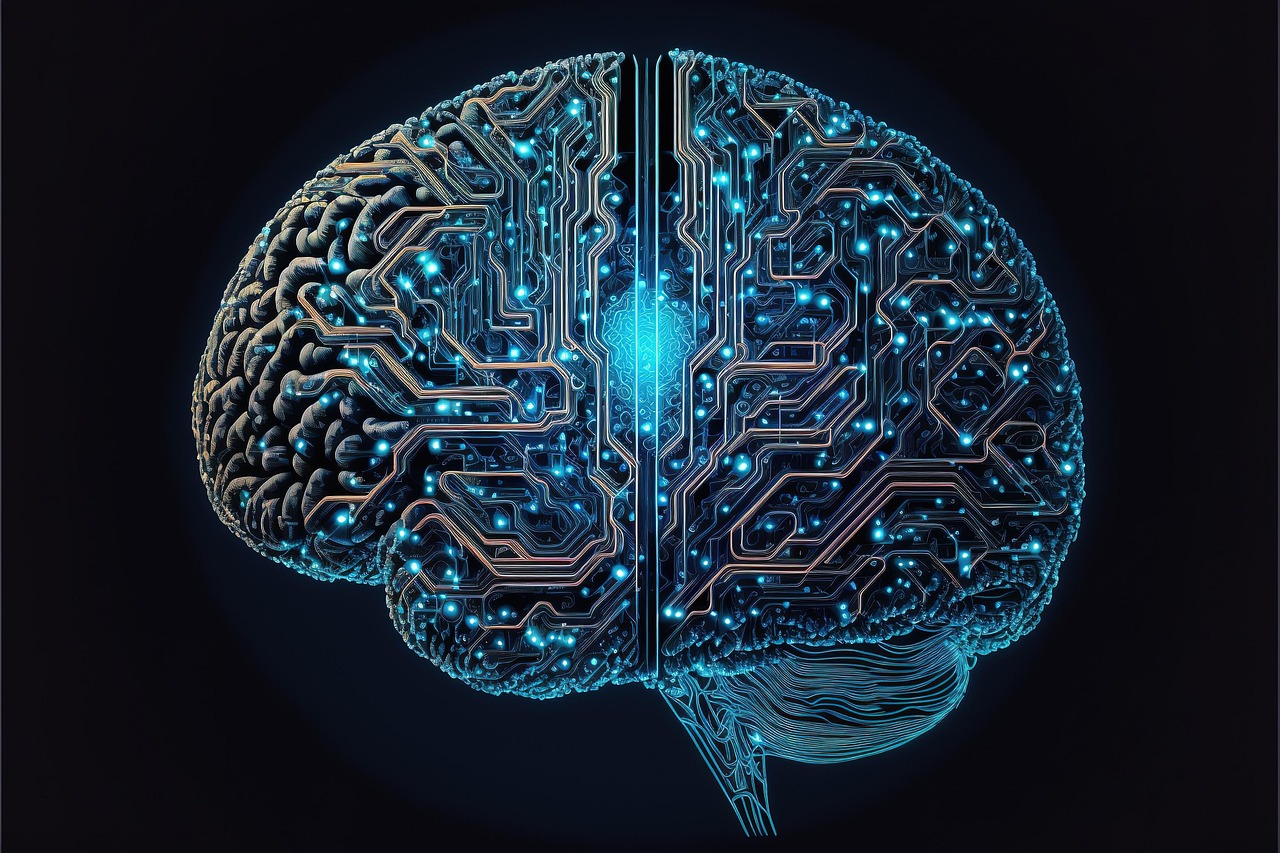
Forget Silicon, Meet the Living Logic Gates
For decades, our digital world has been powered by silicon chips, zipping electrons around intricate pathways. But what if your next supercomputer wasn't a cold, hard piece of metal, but a living, breathing network of brain cells? Welcome to the astonishing world of Organoid Intelligence (OI), where miniature, lab-grown brains are being harnessed to perform computations.
What Exactly Are We Talking About?
Imagine taking a tiny cluster of human stem cells – the body's master builders – and gently guiding them in a petri dish to grow into a three-dimensional structure that mimics parts of a human brain. These aren't full brains, of course, but 'organoids' – self-organizing tissues that develop neural networks capable of forming connections and even exhibiting basic brain activity. Think of them as tiny, biological supercomputers, each a complex tapestry of neurons firing and communicating, much like our own brains do.
Instead of the 'on' and 'off' states of a traditional silicon transistor, these biological processors use the complex electrochemical signals of neurons. Researchers are learning to 'teach' these mini-brains, for example, by exposing them to different stimuli and observing how their neural networks adapt and 'learn' – a process far more akin to natural intelligence than any current AI algorithm.
Why Does This Matter? Beyond the Hype.
The implications are staggering. Here's why Organoid Intelligence isn't just a fascinating lab experiment:
- Unparalleled Energy Efficiency: Traditional data centers consume colossal amounts of electricity. Your brain, in contrast, runs on the power of a dim lightbulb. OI promises a future of ultra-low-power computing, a game-changer for sustainability and portability.
- New Frontiers in Learning: Silicon-based AI is incredible, but it's fundamentally different from biological learning. OI could unlock entirely new paradigms for artificial intelligence, allowing for more adaptive, context-aware, and potentially even 'creative' forms of computation. Imagine AI that doesn't just process data but truly 'understands' and learns in a biological way.
- Unlocking Brain Mysteries: By studying these living computers, we gain unprecedented insights into how our own brains work, how diseases like Alzheimer's progress, and how memories are formed. It’s a direct window into the most complex machine known to humankind.
- Revolutionizing Drug Discovery: Testing drugs on living brain tissue, rather than just isolated cells or animal models, could drastically improve the accuracy and speed of developing treatments for neurological disorders.
Your Career in the Living Computer Revolution
This isn't science fiction; it's a rapidly emerging field creating entirely new job categories. If you're looking to future-proof your career, here’s how Organoid Intelligence will reshape the landscape:
- Neuro-Engineers & Bio-Interfacing Specialists: These roles will design the 'hardware' and 'software' to connect traditional electronics with biological systems, creating the interfaces that allow us to 'program' and 'read' these living computers.
- Computational Biologists & Bio-Informatics Scientists: Analyzing the vast, complex data generated by organoids will require specialists who can model biological systems, identify patterns, and develop algorithms for biological learning.
- Ethicists & Bioethicists: As we create more complex living systems capable of computation, profound ethical questions will arise. Specialists in this area will be crucial for guiding responsible development and policy.
- Lab Automation Engineers: Scaling up OI research and potential applications will demand highly automated systems for growing, maintaining, and experimenting with organoids.
- Biomanufacturing Technicians: Skilled professionals will be needed to cultivate and maintain these delicate biological systems in controlled environments.
The era of living computers is no longer a distant dream. It's a rapidly unfolding reality, promising not just a new kind of machine, but a deeper understanding of life itself. Are you ready to compute differently?