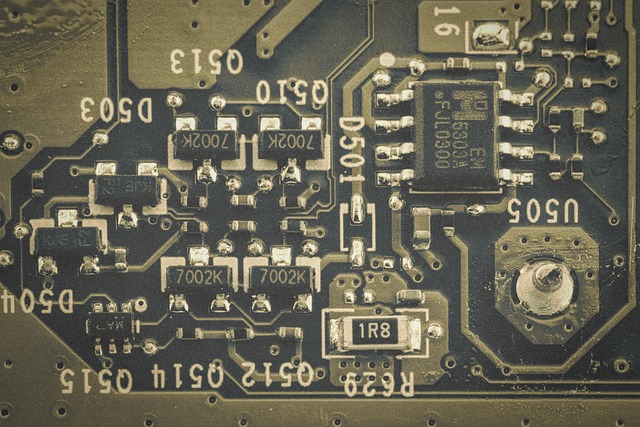
Recent industry developments indicate a major pivot toward deep-stack hardware-software co-design, where AI models are no longer just running on generic GPUs but are being architected to interface directly with custom silicon instructions. This shift, led by collaborations between NVIDIA and Arm, focuses on 'Instruction Set Architecture' (ISA) extensions specifically designed for Transformer-based workloads. By eliminating the translation overhead between high-level AI frameworks (PyTorch/JAX) and physical hardware execution, companies are seeing a 3x increase in power-to-performance efficiency. This signals a move away from 'off-the-shelf' cloud compute toward bespoke, application-specific AI chips that prioritize low-latency inference for real-time edge devices.
🚀 Career Roadmap: How to Adapt?
1. Master Low-Level Programming: Focus on C++ and CUDA to understand memory management and GPU kernel optimization. 2. Learn Hardware Architecture: Study RISC-V or Arm ISA to understand how software instructions map to physical silicon. 3. Toolkits: Get proficient with Triton (OpenAI’s language for custom GPU kernels) and NVIDIA Nsight for performance profiling. 4. Strategic Pivot: Transition from pure MLOps toward 'AI Systems Engineering', bridging the gap between model deployment and hardware constraints.