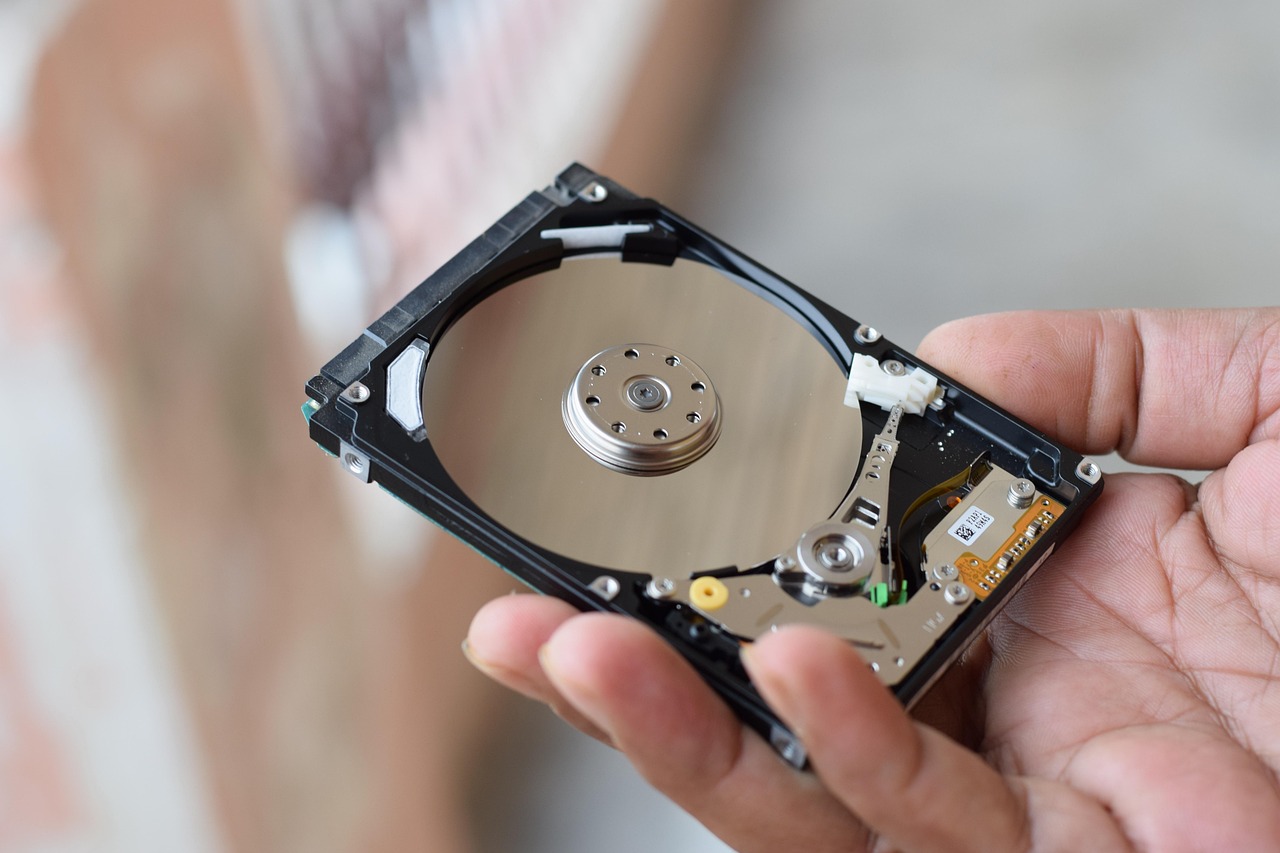
Forget Hard Drives: Your Data is About to Get Biological
Imagine a tiny speck, smaller than a grain of sand, holding every movie ever made, every book ever written, and every photo ever taken. Sounds like science fiction, right? Well, welcome to the cutting edge of biocomputing, where scientists are turning the very building blocks of life – DNA – into the ultimate data storage solution. Forget clunky server farms and fragile flash drives; your next archive might just be a test tube.
What is This Magic? DNA as the Ultimate Hard Drive
Think about how computers store information: it's all 0s and 1s, a binary code. Our DNA, the genetic blueprint inside every living thing, also stores information, but it uses a four-letter alphabet: A, T, C, and G (adenine, thymine, cytosine, and guanine). Scientists have figured out how to translate those digital 0s and 1s into sequences of A, T, C, G, essentially "writing" our digital files into synthetic DNA strands.
Here’s a simplified breakdown:
- Encoding: Your cat video (or a massive database) is converted from 0s and 1s into a unique sequence of A, T, C, G letters.
- Synthesizing: These DNA sequences are then chemically built, strand by strand, in a lab. It's like printing a book, but instead of ink on paper, it's genetic code in a molecule.
- Storing: Once synthesized, these DNA strands are incredibly stable. They can be dried, frozen, or even stored at room temperature for thousands of years without degrading. Think of ancient fossils – that DNA has lasted millennia!
- Retrieving: When you want your data back, scientists "read" the DNA sequence using advanced sequencing machines, and then translate the A, T, C, G back into the original 0s and 1s. Voila! Your cat video reappears.
Why Does This Matter? We're Drowning in Data
Every single day, we create an astounding amount of digital information – emails, photos, videos, scientific data, business records. Current data centers consume vast amounts of energy and space, and traditional storage media degrade over time. This is where DNA storage swoops in like a superhero:
- Density Beyond Belief: A single gram of DNA can theoretically store all the data from Google, Facebook, and every other major tech company combined – multiple times over. It’s the densest storage medium known to man.
- Longevity for the Ages: Unlike hard drives that fail after a few years or magnetic tapes that need constant migration, DNA can last for thousands of years, just like the genetic material found in mammoths.
- Energy Efficiency: Once the data is "written" into DNA, it requires virtually no energy to maintain. Compare that to the always-on, power-hungry servers of today.
This isn't just about saving your vacation photos. It's about preserving humanity's knowledge, archiving scientific breakthroughs, and creating a truly sustainable foundation for the information age.
Your Career Path: Building the Biological Byte Highway
This isn't some far-off dream; it's happening now, and it's creating entirely new career opportunities. If you're looking for a field that blends biology, computer science, and engineering, this is it. Here’s how you can prepare:
- Bioinformatics Specialist: These are the translators. They develop the algorithms and software to encode digital data into DNA sequences and decode it back. Think of them as the architects of the biological byte highway.
- Synthetic Biologist / Molecular Engineer: These hands-on experts work in labs to physically synthesize the DNA strands, ensuring accuracy and efficiency. They're the builders of the biological hard drives.
- Data Storage Architect (Bio-focused): Moving beyond traditional IT, these roles design and manage the infrastructure for massive DNA data archives, integrating biological storage with existing digital systems.
- Lab Automation Engineer: The process of synthesizing and sequencing DNA needs to be highly automated. These engineers design and maintain the robots and systems that make large-scale DNA data operations possible.
- Biosecurity Analyst: As biological systems become data carriers, new security challenges emerge. These professionals will protect biological data from unauthorized access or manipulation.
The convergence of biology and computing is not just a technological shift; it's a paradigm shift for how we interact with information. For those ready to blend the logic of code with the wonders of life, the future of data storage offers a vibrant, impactful, and incredibly exciting career landscape.