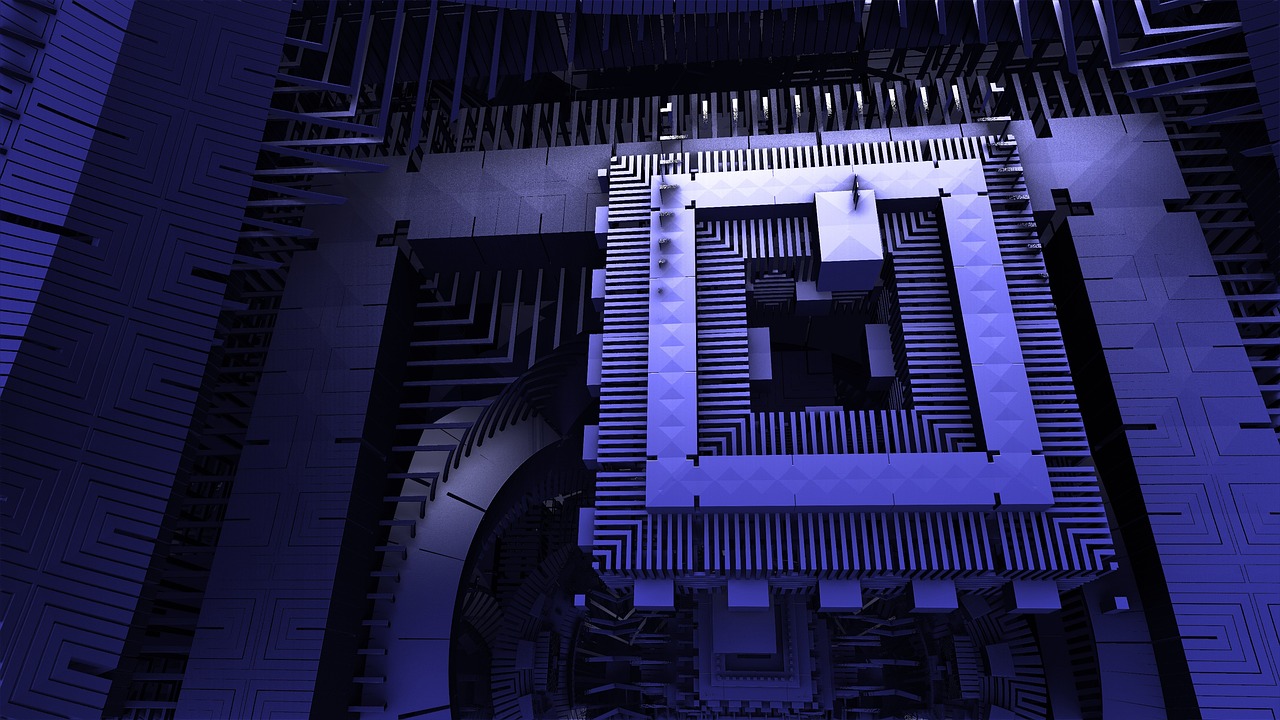
The Quantum-Classical Convergence
As we approach the limits of classical silicon-based backpropagation, a new frontier emerges: Variational Quantum-Classical Manifold Mapping (VQCM). This paradigm utilizes parameterized quantum circuits to perform non-linear transformations on high-dimensional data, mapping complex features into Hilbert spaces that are computationally inaccessible to classical neural architectures.
Why It Matters
Current models struggle with 'curse of dimensionality' in high-entropy datasets. VQCM leverages quantum superposition to represent these manifolds more efficiently, enabling a quantum advantage in feature extraction for generative modeling. By offloading the most non-linear operations to a quantum processing unit (QPU), we achieve a drastic reduction in the energy-latency product of deep learning pipelines.
Underlying Architecture
The architecture relies on a Coherent Variational Interface, where classical weights are mapped to quantum gate rotation angles. Through a feedback loop, the system optimizes the quantum state to minimize the divergence between the classical input manifold and the quantum latent representation. This bridge allows for real-time error mitigation using classical variational optimizers, turning noisy intermediate-scale quantum (NISQ) devices into robust inference engines.
Key Takeaways
- Quantum-enhanced feature dimensionality reduction is now feasible on near-term hardware.
- Integration of Variational Quantum Circuits (VQC) with classical Transformers creates a hybrid 'Quantum-Attention' mechanism.
- Reduces the reliance on massive GPU clusters for high-dimensional feature mapping.